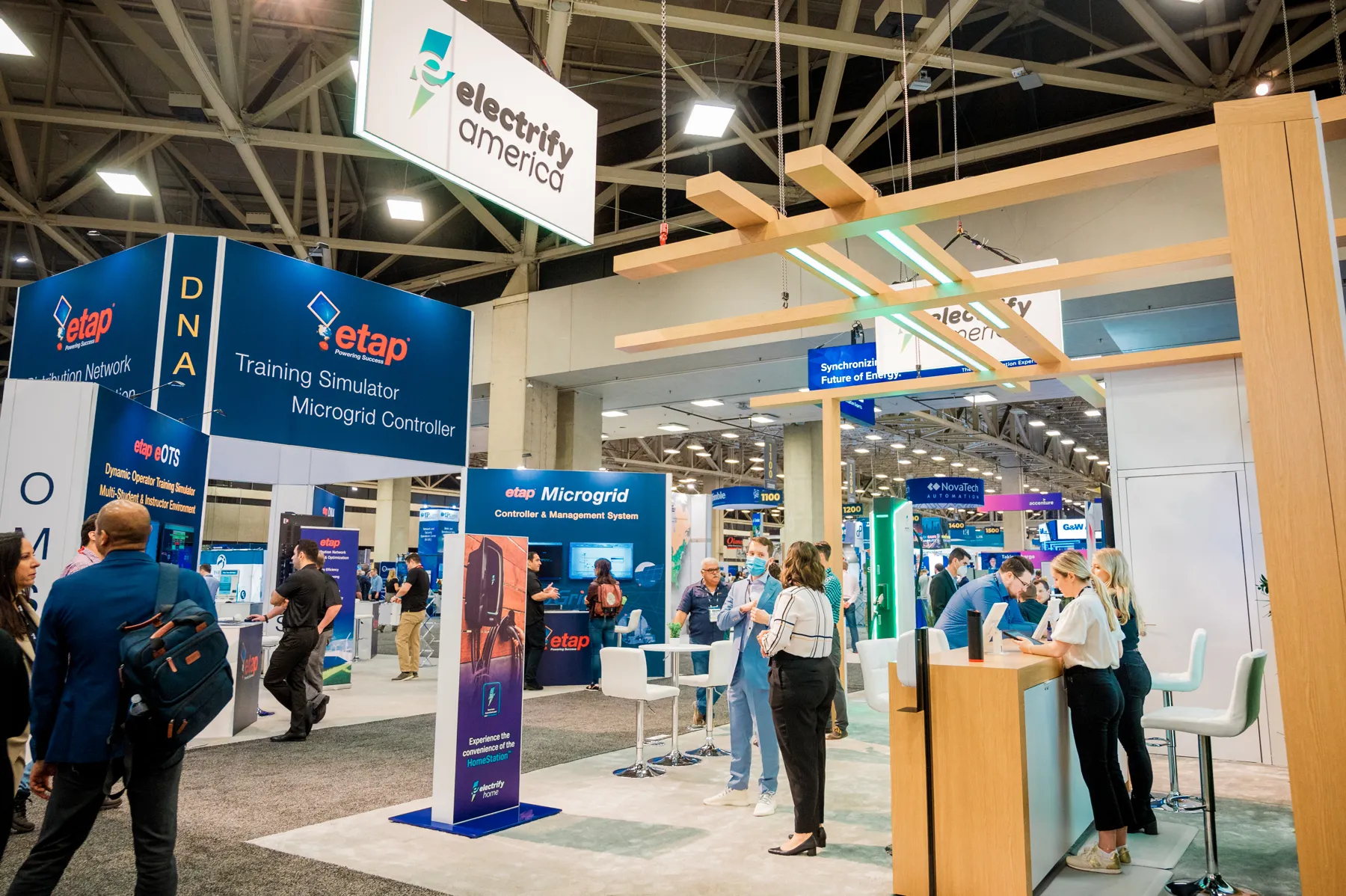
How do lead capture systems adapt to OCCC's scale?
Systems scale via distributed RFID and mobile units across 2,053,820 square feet, syncing over free Wi-Fi to handle 1.4 million attendees, with EAC-compliant utility orders.

Capabilities
Lead Capture and Digital Engagement support for Orlando exhibitors, shaped around venue timing, rental display needs, and a cleaner show-floor plan.
Improve your Orlando Display Leads TodayPre-show synchronization with event registration databases to enable RFID badge reads across OCCC's 2,053,820 square feet of display space
Real-time dashboard monitoring compatible with free Wi-Fi in OCCC food courts and public areas for instant lead qualification
Hybrid capture methods blending QR kiosks and mobile apps for hotel venues like Rosen Centre's 67,448 square feet of display area
Compliance workflows adhering to EAC guidelines and show-specific manuals at connected properties such as Hyatt Regency Orlando
Post-event data export protocols optimized for Florida's open-market labor environment supporting diverse tech integrations
Scalable analytics tracking engagement in multi-day events spanning International Drive convention district hotels
Integration testing for outdoor spaces at Hilton Orlando, leveraging 159,019 square feet of display capacity under 26-foot ceilings
The Orange County Convention Center's unparalleled 2,053,820 square feet of display space demands lead capture architectures that scale across multiple halls, each potentially hosting simultaneous interactions from 1.4 million annual attendees. Coordination begins with mapping traffic patterns around its three covered loading docks and 173 truck bays, positioning fixed scanners at entry points and mobile units for booth circuits, ensuring data captures visitor dwell times, booth visits, and session interests without interrupting the flow through its 74 meeting rooms.
Digital engagement amplifies this by deploying interactive screens tied to the center's free Wi-Fi in public areas and food courts, prompting scans that log preferences for the Tangerine Ballroom's 48,961 square feet or general assembly zones. Pre-event protocols verify compatibility with OCCC's exhibitor/EAC conditions, ordering utilities directly where required, while right-to-work flexibility allows exhibitor teams to manage handheld devices during move-in phases supported by on-site parking for 6,227 vehicles.
Ongoing expansions like the Grand Concourse project necessitate adaptive planning, testing latency in larger configurations to maintain 99% capture rates even as event footprints expand, feeding qualified leads into segmented lists for immediate follow-up.
RFID gates at hall entrances syncing with 235 breakout configurations
Beacon-triggered app notifications in Wi-Fi zones
Cloud backups mitigating any aerial rigging-related power fluctuations
Conference hotels in Orlando's International Drive district, such as the Hyatt Regency Orlando with its 315,000 square feet of function space and three pedestrian bridges to the OCCC, require nuanced digital engagement plans that bridge indoor ballrooms and outdoor areas. Lead capture here focuses on the 110,000 square feet of display space, deploying tablet-based stations in the 54,652-square-foot Regency Ballroom, where 31-foot ceilings accommodate overhead projectors displaying real-time leaderboards of engaged prospects.
These systems integrate with the hotel's state-of-the-art meetings technology, capturing not simply contacts but behavioral data like poll responses during 100+ breakout sessions, ensuring compliance with each property's service manual absent venue-wide union mandates. Coordination extends to post-session nurturing, pushing leads via SMS to 1,641 sleeping rooms connected across the district.
Similar strategies apply at the Hilton Orlando's 249,000 square feet of space, linked by covered walkways, where 51 meeting rooms benefit from app-based gamification tracking flows between lower-level displays and lobby events under 26-foot ceilings.
Multi-screen dashboards in pillar-free ballrooms
Geo-fenced push alerts near pedestrian bridges
Automated lead scoring from theater setups up to 5,800 capacity
Orlando's convention ecosystem, spanning the OCCC and adjacent hotels like Rosen Shingle Creek's 524,000 square feet including 195,000 display area, calls for unified data pipelines that synchronize captures across venues. This involves API handshakes between badge systems in the OCCC's vast halls and QR readers in Rosen's 95,000-square-foot largest room, handling up to 9,500 theater-style interactions with minimal latency over complimentary networks.
Planning accounts for transition dynamics, such as attendee shifts via pedestrian bridges, using device-agnostic platforms to consolidate profiles enriched with venue-specific notes—like preferences noted in Rosen Centre's 35 breakout rooms—while respecting EAC rules for technical orders. Florida's right-to-work status supports smooth scaling without labor bottlenecks.
Resulting datasets enable on-site segmentation, prioritizing leads from high-capacity receptions up to 10,000 at Rosen properties for targeted digital follow-ups during multi-day rollouts.
Adhering to OCCC exhibitor guidelines and hotel policies, lead capture coordination embeds data protection from inception, scanning only opt-in fields amid the center's LEED EBOM Gold-certified environment. Systems log consents explicitly for the 2.1 million square feet of display space, exporting anonymized analytics post-event to comply with show manuals.
In right-to-work Florida, without default union exclusivity, digital tools focus on encryption during transfers from Hyatt's 182 meeting rooms or Hilton's outdoor venues, safeguarding profiles against breaches in high-density settings drawing economic impacts of $2.1 billion annually.
Audit trails track every interaction, from initial RFID pings in food courts to app downloads, ensuring governance aligns with each event's designated service contractor requirements.
Opt-in verification at every touchpoint
Encrypted cloud syncs for EAC-ordered utilities
Retention policies per Florida data standards
Post-capture analytics dissect performance across Orlando venues, benchmarking scan volumes against OCCC's 200 events or Rosen Shingle Creek's 99 meeting rooms to refine future deployments. Dashboards visualize heatmaps in 67,448-square-foot display zones at Rosen Centre, correlating engagement spikes with traffic from International Drive.
This intelligence informs iterative planning, adjusting kiosk placements in Hilton's 159,019-square-foot spaces based on historical data from 1,424-room attendee pools, maximizing conversions in 26-foot-ceiling halls.
Long-term, aggregated insights from 74 OCCC meeting rooms guide strategy evolution, tying digital metrics to overall display ROI in the convention district.
Heatmap overlays on venue floorplans
Conversion funnel tracking per booth zone
Predictive scoring for repeat events
Transitioning leads from live capture at the OCCC's truck bays to nurture campaigns leverages segmented exports, scheduling drips based on interaction depth in its general assembly areas. For Hyatt Regency events, sequences reference ballroom polls, nurturing 5,400-capacity receptions into sales pipelines.
Coordination ensures venue Wi-Fi logged behaviors trigger personalized content, respecting EAC boundaries while utilizing Florida's labor flexibility for rapid deployment reviews.
This closes the loop, converting Orlando's high-volume interactions—1.4 million attendees yearly—into sustained revenue streams.
FAQ
Systems scale via distributed RFID and mobile units across 2,053,820 square feet, syncing over free Wi-Fi to handle 1.4 million attendees, with EAC-compliant utility orders.
QR kiosks and app integrations suit Hyatt Regency's 315,000 square feet and pillar-free spaces, capturing data from 182 rooms with state-of-the-art tech.
Florida's right-to-work status supports flexible integrations, though OCCC requires direct orders for certain services per EAC conditions.
Encryption and opt-in protocols protect profiles from OCCC halls to Rosen properties, with audit trails matching show manuals.
Real-time dashboards and post-event heatmaps benchmark against venue metrics like Hilton's 249,000 square feet, optimizing future ROI.
Unified APIs consolidate data from pedestrian bridge-linked sites, segmenting leads from OCCC expansions to adjacent hotels.
Ready for the next Orlando show?